 0:49
Excavation and placement of a wastewater treatment plant step by step
Customers usually do the excavation, the base slab and the placement of the tank themselves. This guide takes you through the whole process of placing the tank, from preparation to backfilling. A plastic wastewater treatment plant (WWTP) lasts for decades if it is placed correctly, and most problems arise precisely during placement.
- Step-by-step guide
- Excavation video
- Advice by phone or via WhatsApp
On this page
WWTP excavation on video
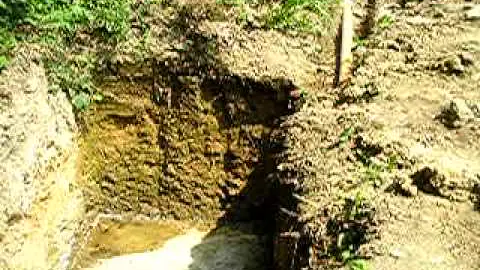
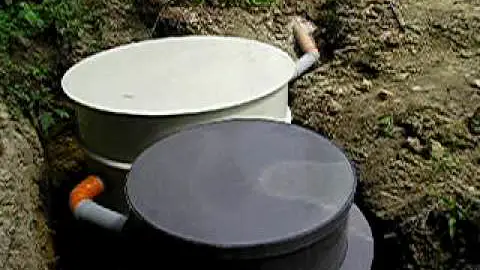
The video loads from YouTube after you click.
1. Preparation
The manufacturer’s installation instructions and the design always apply as well. Before you start digging, check the following points.
- The location matches the design: enough fall on the sewer connection from the house, access for the vacuum tanker during desludging, and a safe distance from the well and the plot boundaries.
- Underground utilities have been marked out before excavation.
- The tank can only be placed at temperatures above 5 °C.
2. Excavation and base slab
The pit must be larger than the tank to leave working space around it, and deep enough for the inlet from the house to have a steady fall. Cast a concrete base slab at the bottom. Its surface must be level to within ±5 mm; otherwise the tank could be loaded unevenly.
3. Placing the tank
Before placing the tank, check the tank and the extension riser for damage. The plastic tank is light, so lower it on lifting straps, often without heavy machinery. Level it on the cleaned slab. The deviation from level must not exceed ±5 mm; otherwise lift the tank out and correct the slab.
4. Connection
Connect the inlet from the house and the treated water outlet, and lay the air pipe from the blower and a cable duct for the power cable. The pipes must be below the frost line or insulated, exactly as the design specifies.
5. Backfilling while filling the tank with water
This is the most important step. Fill the tank with water and, at the same time, backfill it or encase it in concrete in layers. The water level inside and the height of the backfill must not differ by more than 10 cm, so that the pressure from outside and inside stays balanced. For the backfill, use sand or sand and gravel without stones, at least 15 cm thick around the tank wall.
Never backfill an empty tank or encase it in concrete. The pressure of the soil or concrete would deform it.
6. High water table
If the groundwater is high, keep pumping it out of the pit while you place the tank, and anchor the tank or encase it in concrete so that the water cannot push it up after backfilling. Never empty such a WWTP completely later on.
7. Air blower and start-up
Put the air blower in a ventilated cabinet or a plant room where it is sheltered from rain and flooding, and connect it via a residual current device (RCD). Adjustment and seeding follow. We can advise you by phone or via WhatsApp, and if necessary, a technician will come in person. More →
What to avoid
- backfilling an empty tank
- stones and rubble in the backfill, which press on the tank wall
- cars and heavy machinery driving over the plant unless it has been placed to take vehicle loads
- soil and stones that have fallen into the tank; remove them before start-up
- placing the tank in frosty weather
The tank is watertight, so it needs no waterproofing.
Frequently asked questions
Can I place the WWTP myself?
Yes, customers usually do the excavation, the base slab and the placement themselves. Follow the design and the manufacturer’s instructions, because mistakes in backfilling and levelling are hard to correct later and may affect the warranty.
How long does placement take?
Once the excavation and the base slab are ready, placing a domestic WWTP usually takes a few hours. The total time depends on the subsoil and the groundwater.
Will you help me if I get stuck?
Yes. We can advise you by phone or via WhatsApp, including from photos or a video of the excavation. If you need help on site, we will send you a non-binding quote.
Why choose Bednár Montáže
- Up to 99% efficiencyFor the main parameters, according to the manufacturer’s data.
- No corrosionAn all-plastic PP and PE tank that does not rust.
- Air blower outside the tankQuiet running, up to 36 dB for the smallest plants according to the manufacturer.
- Tested to EN 12566-3CE marking and declaration of performance.
- Everything from one companySales, design, permit, guides, service, inspection and parts.
- Copes with holidaysAlso tested with a slightly intermittent inflow.
Not sure how to place the tank?
Send us photos of the excavation or get in touch via WhatsApp. +421 905 229 394