 1:04
Industrial and municipal wastewater treatment plants
Municipal and industrial wastewater treatment plants (WWTPs) are designed for larger villages and towns or parts of them, agglomerations, larger holiday resorts, hotels, amusement parks and all kinds of industrial businesses. We design every plant individually, based on the amount and composition of the wastewater, the permit requirements and what the site allows.
- Design for your site
- Phased construction
- Automatic control
- Plant operation on request
On this page
Who large plants are for
This category mostly covers plants above 200 population equivalent (PE, Slovak EO), or plants with a specific chemical and pollutant load that are fitted with additional treatment stages to suit the business concerned. For smaller buildings such as guesthouses or blocks of flats, medium-sized sewage treatment plants are a better fit.
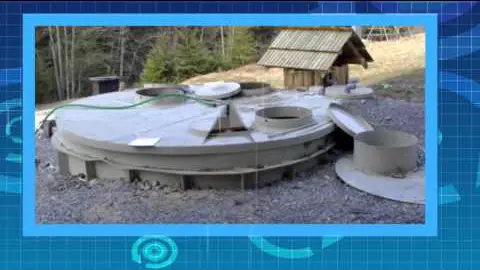
The core of the treatment line is usually an activated sludge reactor with mechanical pre-treatment. The tanks are divided by partitions into separate process compartments, and the process equipment is installed in them on site. The tanks sit partly or fully below ground. They are covered with steel gratings, plastic covers or concrete slabs with inspection openings. Larger tanks have steel access walkways above them. The plant can also be housed in a roofed building. The location of the compressed-air sources and the electrical switchboard is determined in the design.
The treatment line
1. Mechanical pre-treatment
It consists of screens – coarse screens, fine screens or a screen basket – and, where needed, a pumping station with cutter pumps. A grit and gravel trap is added if required.
2. Activated sludge reactor
Treatment is based on a reactor with denitrification and nitrification sections. The nitrification section contains the aeration system, and the air comes from blower units in acoustic enclosures or in blower houses. Nitrogen is removed by internal recirculation of the mixed liquor between the two sections. For phosphorus removal, the plant is fitted with precipitant dosing.
In larger plants, the process can be extended with sludge regeneration. This reduces the required activation volume and improves the settling properties of the sludge without reducing treatment efficiency. In the final settling tank (clarifier), the treated water is separated from the activated sludge and flows out through outlet troughs with scum baffles and through a flow-measuring structure. The settled sludge is pumped back to the start of the process by external recirculation.
3. Tertiary treatment
Where stricter requirements apply to the quality of the treated water, a further stage can be added after the reactor. This is usually a soil filter, a reed bed (constructed wetland) or a separate polishing stage with microfiltration, sand filtration or filtration on filter cloths. The treated water can be disinfected with chlorine or UV radiation, with automatic control.
4. Sludge handling
It consists of a sludge holding tank with a capacity of at least 100 days and, where needed, a mobile dewatering unit. Excess sludge stabilised in the reactor is thickened and stored in the sludge holding tank. Once dewatered to a spadeable state, the sludge can be used in agriculture in line with the applicable regulations or taken away for further processing.
5. Measurement and control
The plants are fitted with an automatic control system that allows them to run with minimal intervention in the treatment process. The control unit processes data from an ultrasonic level sensor, an oxygen probe and other devices and controls the whole line according to the amount of wastewater. Precipitant or chlorine dosing can be automated, and the system can be connected to a computer, which makes the plant more reliable and easier to operate.
If the automatic control system is not part of the supply, we can also lend it to you for an agreed period. That way you can see its benefits before you decide to buy it.
Advantages of our plants
- high treatment efficiency
- process technology that copes with operation at lower pH, allows sludge regeneration and suppresses the formation of filamentous sludge
- an upstream pumping station that evens out surges in the inflow
- automated operation that reduces electricity consumption, equipment wear and the need for manual work
- stabilised, spadeable sludge
- low running costs and little need for operator attention
- long service life thanks to non-corroding materials
- phased construction to suit the client’s budget, with every phase fully functional
- operation of the plant on your behalf, on request
Discharge limits
For sources above 50 PE, the limits depend on the size of the agglomeration. For discharge into surface waters, Annex 6 of Government Regulation No. 269/2010 Coll. sets the following values in mg/l (p = composite sample, m = maximum):
| Size of source | CODCr p / m | BOD5 p / m | TSS p / m |
|---|---|---|---|
| 51–500 PE | 150 / 220 | 40 / 70 | 50 / 80 |
| 501–2,000 PE | 135 / 170 | 30 / 60 | 30 / 60 |
For larger sources, limits for ammonium nitrogen, total nitrogen and phosphorus are added. The specific values, sampling frequency and other conditions are set in the permit issued by the state water authority (orgán štátnej vodnej správy).
Operating the plant
If a municipality or company does not have its own operating staff, we can run the plant for them: regular checks, adjustment, sampling, sludge removal and keeping the operating records.
Our process
- Information: number of connected inhabitants, industrial wastewater, expected future development
- Process design and comparison of options
- Design and permits in cooperation with the project designer
- Supply and installation of the process equipment, start-up and trial operation
- Service or plant operation
Large plants on video
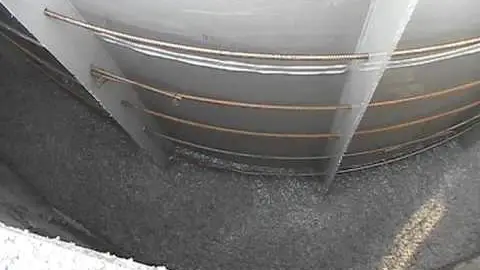
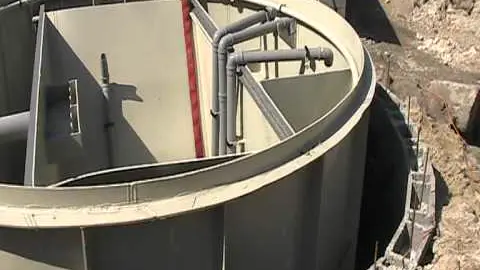
The video loads from YouTube after you click.
Why choose Bednár Montáže
- Up to 99% efficiencyFor the main parameters, according to the manufacturer’s data.
- No corrosionAn all-plastic PP and PE tank that does not rust.
- Air blower outside the tankQuiet running, up to 36 dB for the smallest plants according to the manufacturer.
- Tested to EN 12566-3CE marking and declaration of performance.
- Everything from one companySales, design, permit, guides, service, inspection and parts.
- Copes with holidaysAlso tested with a slightly intermittent inflow.
Planning a treatment plant for a municipality or a business?
Send us the basic details and we will prepare a process design and a quote. +421 905 229 394