 Choosing and buying
Cesspool or wastewater treatment plant: how to decide
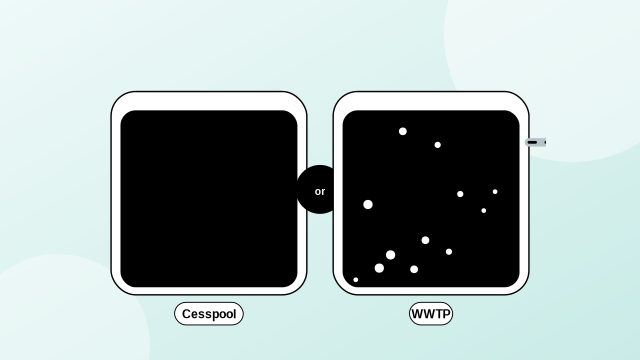
A cesspool (sealed holding tank) collects wastewater until it is emptied, while a domestic wastewater treatment plant (WWTP) treats it on your plot…
7 min readWhen renovating a house, or when a cesspool (sealed holding tank) has to be emptied often, many owners ask whether they can replace it with a wastewater treatment plant (WWTP). It is possible, but first you need to check two things: whether the regulations allow it in your area and where the treated water will go.
A small treatment plant may be used where connection to the public sewer is not technically possible or would be unreasonably costly. If there is a sewer in front of the house, the obligation to connect usually takes priority.
The second condition is a place where the treated water can be discharged. The first choice is a watercourse. If that is not possible, the water is led into the groundwater through a soakaway. In every case, it must be possible to take samples.
How to infiltrate treated water →
The options depend on the condition of the cesspool and on the authority’s decision. These are the solutions most often considered:
A treatment plant is not usually placed inside the old cesspool. The tank would be inaccessible, and there would be problems with ventilation and with access for servicing.
Safety: Never enter a cesspool. Life-threatening gases can build up in closed tanks. Leave any work inside the tank to a company with the right equipment and authorisation.
A replacement differs from a greenfield build. The connection already exists, but it may not have the right fall and height for the new inlet.
Your old cleaning habits also need to change. Almost anything could be poured into a cesspool, but not into a treatment plant. See what not to put in a WWTP.
A cesspool has its place. It is suitable where there is nowhere to discharge treated water, or for a rarely used cottage. That is why we also supply plastic cesspools. You will find a comparison of the two solutions in our article Cesspool or WWTP.
The paperwork usually takes the longest; the replacement itself tends to be quick. Break it down like this:
| Phase | What happens | What to bear in mind |
|---|---|---|
| Preparation | Checking the sewer and discharge options | The sooner, the better |
| Paperwork | Design, an assessment if needed, permit | Most of the time |
| Order | Delivery of the plant | Usually 2 to 4 weeks |
| Excavation | Pit, base slab | At temperatures above 5 °C |
| Switchover | Placement and connection | Empty the cesspool just before the work |
| Start-up | Adjustment and establishment period | Full efficiency after a few weeks |
You do not have to move out of the house during the replacement. However, plan the switchover so that the drains are out of use for as short a time as possible. Have the cesspool emptied just before the work so that it still has some spare capacity.
A treatment plant is a living system, and it pays you back when you look after it. After switching from a cesspool, get used to the following:
We show the basic check in our video guides. Cesspool emptying will stop, but desludging, servicing and a technical inspection (technická revízia) will be added.
No. Discharge of treated water is permitted by the district office. Without a permit, you would be operating the plant in breach of the law.
Not always. Once it has been emptied and cleaned, it can be taken out of use or, under certain conditions, used as a storage tank. The design and the permit decide.
That depends mainly on getting the permits. The delivery time for a treatment plant is usually 2 to 4 weeks, and the placement itself usually takes a few hours once the excavation is ready.
Choosing and buyingA cesspool (sealed holding tank) collects wastewater until it is emptied, while a domestic wastewater treatment plant (WWTP) treats it on your plot…
7 min read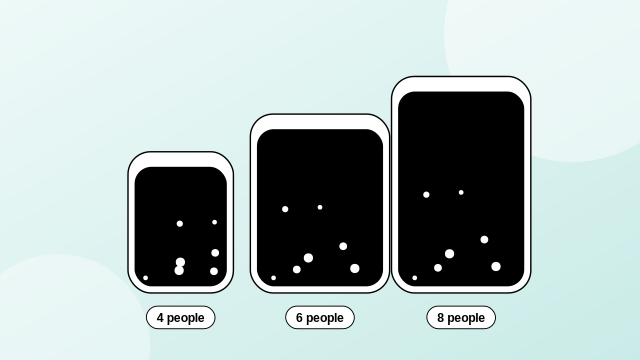 Choosing and buying
The size of a domestic wastewater treatment plant (WWTP) is given in population equivalents (PE, Slovak EO).
7 min read Choosing and buying
Two quotes for a domestic wastewater treatment plant (WWTP) can look the same on paper and still behave differently in operation.
7 min readSend us photos of the cesspool and your plot, and we will advise you without obligation. +421 905 229 394
Strictly necessary cookies keep the website working. With your consent, we also use analytics and marketing cookies (Google, Meta, LinkedIn, Pinterest) to measure traffic and for advertising. You can change your consent at any time using the Cookie settings link in the footer. More about cookies