 Choosing and buying
What size wastewater treatment plant do I need?
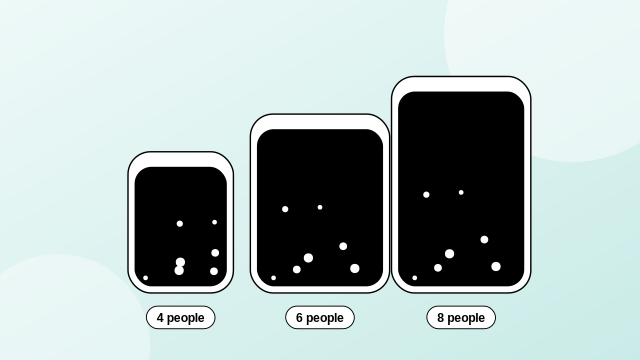
The size of a domestic wastewater treatment plant (WWTP) is given in population equivalents (PE, Slovak EO).
7 min readA cesspool (sealed holding tank) collects wastewater until it is emptied, while a domestic wastewater treatment plant (WWTP) treats it on your plot and discharges it. The choice depends on the sewer in your municipality, on where the water can be discharged and on how you use the building. We sell both solutions, so below you will find when each one fits and what obligations it brings.
If a public sewer has been set up in the municipality, the owner of the building or land must connect to it, unless they have a permit for another way of dealing with wastewater (Section 23(2) of Act No. 442/2002 Coll. on Public Water Supply and Public Sewerage). A small WWTP, which includes domestic plants, may only be used in such an area if connecting to the sewer would be unreasonably costly in technical or economic terms (Section 5a(4) of Government Regulation No. 269/2010 Coll.).
If a sewer is only being planned, ask at the municipal office what stage the project is at, when construction is due and whether the sewer will reach your plot. A construction permit for a cesspool or a small WWTP can only be issued for a limited period. Once a sewer has been built and is in operation in the area, the permit is not renewed when it expires (Section 36(4) of the Water Act, Act No. 364/2004 Coll.).
If the sewer is due to arrive in the foreseeable future, a cesspool is often a practical interim solution that you take out of use once you are connected. Lay the house drains so that they can later be linked to the sewer connection.
Before you buy: Check with the district office (okresný úrad), department of environmental care (odbor starostlivosti o životné prostredie), whether it will permit a small WWTP in your area. For agglomerations below 2,000 population equivalent (PE, Slovak EO), the Water Act mainly names watertight cesspools, and it explicitly mentions small WWTPs for sparsely populated areas (Section 36(3)).
Nothing flows out of a cesspool, so this question only concerns a WWTP. The options, in order of priority, are:
It must always be possible to take a sample at the outlet. For groundwater, more samples are needed and several limits are stricter. More in our article on infiltrating treated water.
At about 80 litres per person per day, a household of four produces around 320 litres a day, which is roughly 10 m³ a month.
What matters is what the location allows and which obligations you can meet in the long term. Take a look at our plastic cesspools and domestic treatment plants.
What matters is how regularly the cottage is used and whether it has electricity.
For a cottage used only a few times a year, a cesspool is therefore usually the simpler option.
| Area | Cesspool | Domestic WWTP |
|---|---|---|
| Permit | For construction, for a limited period. The municipality gives its opinion on a household cesspool. | For construction, for a limited period, and for discharge from the district office. |
| Operation | The tank must be watertight. The contents must not be discharged into surface waters or groundwater. | In line with the authority’s decision, the operating manual (prevádzkový poriadok) and the manufacturer’s recommendations: checks, maintenance, remote monitoring of operation. |
| Removal | To a wastewater treatment plant. It may be done by the public sewer operator, the municipality or an authorised contractor. | Sludge is removed by an authorised contractor, usually once every 6 to 12 months. |
| Records | Proof of emptying, on request of the municipality or the authority, for the last two years at most. | Operating log (prevádzkový denník): maintenance, samples and reports, sludge removal, faults and repairs. |
| Technical inspection | Does not apply. | Once a year, with remote monitoring once every two years. Results to the authority by 30 January of the following year, deficiencies remedied within 60 days. |
| Water analyses | Do not apply. | One sample a year for surface waters, two for groundwater. The permit sets the scope. |
| Fine | For failing to prove emptying: private individual up to €165, company or sole trader €500 to €3,300. | For breaching the technical inspection obligation: the same range. |
Always ask the emptying contractor for proof of emptying showing the date, the location of the cesspool, the quantity, the contractor and the treatment plant where the contents were taken. If the cesspool fills much more slowly than your water consumption would suggest, check that it is watertight.
The inspection is carried out by a certified inspection technician (revízny technik s osvedčením). Check the permit procedure under the Building Act (Act No. 25/2025 Coll.) with the district office; you will find more in our article on the WWTP permit.
With a permitted cesspool, yes, if it is technically possible and would not involve unreasonably high costs. With a WWTP, once you no longer have a valid permit for another way of dealing with wastewater (Section 23(2) of Act No. 442/2002 Coll.).
No. For surface waters, the discharge permit (povolenie na vypúšťanie) can be issued for a maximum of ten years, for groundwater for six. The authority may renew it if the conditions have not changed (Section 21 of the Water Act).
For a cesspool, yes: emptying and the records do not depend on how often you stay there. For a small WWTP, we have not found an exception for occasional use in the regulations, so check with the district office.
Yes, if there is somewhere to discharge the treated water and the district office permits it. Whether the original tank can be reused depends on its condition.
Sources: Act No. 364/2004 Coll., Act No. 442/2002 Coll., Government Regulation No. 269/2010 Coll.
Choosing and buyingThe size of a domestic wastewater treatment plant (WWTP) is given in population equivalents (PE, Slovak EO).
7 min read Choosing and buying
Two quotes for a domestic wastewater treatment plant (WWTP) can look the same on paper and still behave differently in operation.
7 min read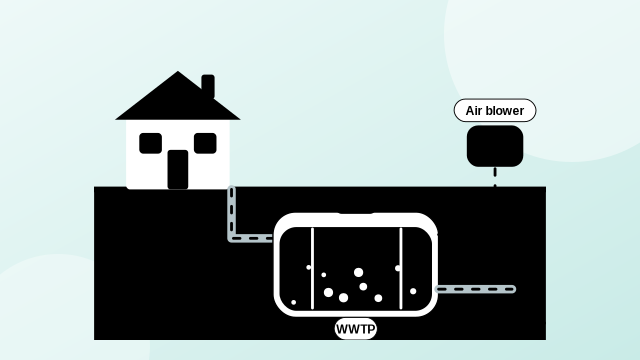 Choosing and buying
A cottage differs from a family house in one respect: for a while nobody is there, and then suddenly there are eight people for the weekend.
5 min readWrite to us with your town or village, the number of people and how you use the building, and we will help you choose. +421 905 229 394
Strictly necessary cookies keep the website working. With your consent, we also use analytics and marketing cookies (Google, Meta, LinkedIn, Pinterest) to measure traffic and for advertising. You can change your consent at any time using the Cookie settings link in the footer. More about cookies