 Operation and maintenance
Treatment plant bacteria: when they help and when they do not
In normal operation, a domestic wastewater treatment plant (WWTP) maintains its own culture of bacteria and does not need regular doses from a…
7 min readThe running costs of a domestic wastewater treatment plant (WWTP) cannot be expressed as one figure that applies to everyone. They are made up of six items, and the amounts depend on the type of plant, the number of people in the house and the conditions in your permit. We will show you what belongs in the calculation and how to work out your own figure.
You pay for electricity continuously, and for the other items at intervals set by law, by your permit or by the condition of the plant.
| Item | How often |
|---|---|
| Electricity | continuously |
| Desludging and sludge removal | usually once every 6 to 12 months |
| Service visit | at least once a year |
| Technical inspection | once a year, with remote monitoring once every two years |
| Analysis of the treated water | 1 or 2 samples a year, depending on where the water is discharged |
| Worn parts | according to the instructions and their condition |
We deliberately do not give a flat figure. It varies with the distance to your suppliers, the plant category and the scope of the analyses in your permit.
Electricity is used mainly by the air blower, which pumps air into the tank for the bacteria. You will find its power input on the rating plate or in the plant’s technical data sheet. If the consumption is given there in kWh per day, multiply it by 365 and by the price per kWh.
Formula: power input (W) × operating hours per year ÷ 1,000 × price per kWh = annual electricity cost
Example for a blower with a power input of 60 W running continuously:
The price of €0.20 is only an example for the calculation, not the rate of any particular supplier. At the same price, a blower with a power input of 50 W would use 438 kWh per year, costing €87.60.
You can refine the result with three figures:
You will get a more accurate figure by measuring. If the blower is plugged into a socket in a dry place, connect it through a plug-in energy meter, leave it on for a week and multiply the measured kWh by 52.
You will find these items in price lists and invoices.
Sludge is usually pumped out once every 6 to 12 months, so allow for one or two desludging visits a year in your calculation. A sludge test will show the actual need. When you ask for a price, check whether it includes both transport and the disposal of the sludge. Sludge is removed by an authorised contractor (oprávnená osoba); keep the receipt and record the removal in the operating log (prevádzkový denník).
Allow for at least one service visit a year. Ask whether the price includes a sludge test, cleaning the blower filter, adjusting the plant, the entry in the log and travel costs. Do not compare offers of different scope by the total alone.
The technical inspection (technická revízia) is carried out once a year by a certified inspection technician (revízny technik s osvedčením). If the plant has remote monitoring, once every two years is enough. In that case, put half the price into your annual total and add any monitoring costs. The results must be submitted to the district office (okresný úrad) by 30 January of the following year, and any deficiencies must be remedied within 60 days.
For plants of up to 50 population equivalent (PE, Slovak EO), 1 sample a year is taken when discharging into surface waters and 2 samples a year when discharging into groundwater. A spot sample is sufficient. The price of the analysis also depends on the number of parameters, and your permit sets their scope. For discharge into surface waters, category I has a limit for BOD5 (biochemical oxygen demand) only, category III for five parameters.
The blower runs all year round, so its diaphragms (blower membranes) and valves gradually wear out. The manufacturer states the replacement interval in the instructions; it is usually once every 1 to 3 years. Clean the air filter according to the instructions, as a clogged filter puts unnecessary strain on the diaphragms. We describe the signs of a weakening blower on our page about air blower service.
Spread the cost of parts you do not replace every year over several years. If the instructions plan for a replacement after three years, put a third of the part’s price into your annual total. You can check current prices in our online shop ekotovar.sk (in Slovak). Category +P adds a phosphorus precipitant, and +D adds consumables for disinfection.
Add a reserve to the regular items, because you cannot plan for a fault or for replacing the whole blower. Choose the size of the reserve according to the age and condition of the plant.
Have ready your electricity bill, your permit, invoices and the operating log, where you will find sludge removals, analyses and repairs. Then add up these lines:
| Item | Calculation for one year |
|---|---|
| Electricity | W × hours ÷ 1,000 × price per kWh |
| Desludging | price of one desludging × 1 or 2 |
| Servicing | price of a service visit including travel costs × number per year |
| Inspection | full price, half with remote monitoring |
| Analyses | price of analysing one sample × 1 or 2 |
| Parts | price of the part ÷ years between replacements |
| Reserve | your estimate based on the age and condition of the plant |
If one company can handle the service, the inspection and the sampling in a single visit, you pay travel costs only once. Ask about this in advance and request an itemised breakdown. After a year of operation, replace your estimates with the actual invoices.
A blower with a power input of 50 to 60 W running continuously uses about 440 to 530 kWh a year. Multiply this by your price per kWh to get the cost.
No. The bacteria need air; without it, the treatment process stops and the plant starts to smell. Leave the blower running even while you are on holiday, unless the manufacturer specifies otherwise.
A private individual faces a fine of up to €165, a company or sole trader €500 to €3,300. The inspection is mandatory under Section 53(2) of the Water Act (Act No. 364/2004 Coll.).
Sources: Act No. 364/2004 Coll., Government Regulation No. 269/2010 Coll.
Operation and maintenanceIn normal operation, a domestic wastewater treatment plant (WWTP) maintains its own culture of bacteria and does not need regular doses from a…
7 min read Operation and maintenance
A domestic wastewater treatment plant (WWTP) handles sewage, toilet paper and ordinary household water.
7 min read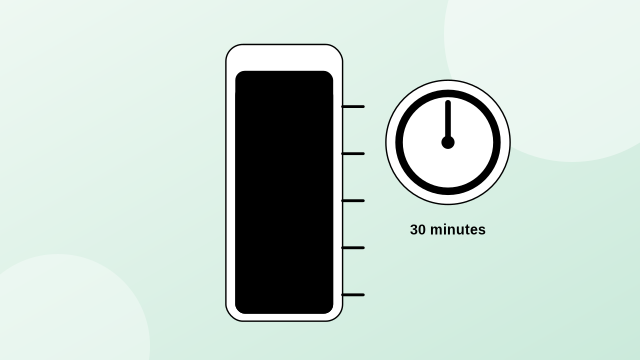 Operation and maintenance
In half an hour, a sludge test shows you how much sludge there is in your domestic wastewater treatment plant (WWTP) and how it settles.
7 min readWe provide servicing and the mandatory technical inspection across Slovakia. +421 905 229 394
Strictly necessary cookies keep the website working. With your consent, we also use analytics and marketing cookies (Google, Meta, LinkedIn, Pinterest) to measure traffic and for advertising. You can change your consent at any time using the Cookie settings link in the footer. More about cookies