 Choosing and buying
How much a home sewage treatment plant costs
The price of a domestic wastewater treatment plant (WWTP) is not a single figure.
6 min readA cottage differs from a family house in one respect: for a while nobody is there, and then suddenly there are eight people for the weekend. The bacteria in a wastewater treatment plant (WWTP), however, need a steady supply of wastewater. That is why, for a cottage, it pays to decide according to how often you really use it.
The work in a treatment plant is done by bacteria bound to the sludge. When no wastewater arrives for a long time, they have nothing to process and their activity drops. When people arrive again, the bacteria suddenly get a bigger load than they are ready for. The result can be poorer effluent quality.
A domestic treatment plant can cope with a short overload or an ordinary holiday. Long breaks and large swings that keep repeating are harder.
| How the cottage is used | Better solution |
|---|---|
| Occupied most of the year or every weekend | Treatment plant |
| Longer seasonal stays, regular letting | Treatment plant that copes with shock loads (sudden peak loads) |
| A few visits a year | More likely a plastic cesspool (sealed holding tank) |
| Nowhere to discharge the treated water | Plastic cesspool |
The conditions on the plot and the permit are also decisive. As with a house, you must work out where the water will drain to and allow for the operating obligations.
Comparing a cesspool and a treatment plant →
Tell the seller exactly how you use the cottage. In particular, ask:
Base the size on normal occupancy, not on a single party a year. Too little water in a plant that is too large is also a problem. Our article on WWTP size will help.
Follow a few simple rules:
For a longer shutdown, especially in winter, the procedure is individual and depends on the type of plant. Follow the operating manual (prevádzkový poriadok) and get advice from your service technician.
After a longer shutdown there may be little sludge, and the bacteria have to get going again. Start gradually, do not load the plant with a lot of water straight away, and watch how the effluent looks. If necessary, WWTP bacteria from our online shop ekotovar.sk (in Slovak) can help. You can check the condition of the sludge with a sludge test.
Seasonal use does not release you from your obligations. You operate a small WWTP in accordance with the decision of the district office (rozhodnutie okresného úradu) and the operating manual. This includes keeping an operating log (prevádzkový denník), sampling as required by the permit, sludge removal by an authorised contractor (oprávnená osoba) and a technical inspection (technická revízia) once a year, or once every two years with remote monitoring.
Every cottage is used differently. To give you a better idea, here are three typical examples. They are not real cases, more an aid to thinking it through.
A regular inflow of water throughout the year. A treatment plant usually makes sense here; getting the size right is what matters.
Guests come and go and do not know the rules. Prepare a short note for them on what must not go down the drain, and plan for regular servicing.
A few visits a season and minimal water. The bacteria would have nothing to process, so a small cesspool is usually the better choice.
Cottages often stand on a slope, in a forest or near water. Before you decide, check the following:
Without electricity, an aerated treatment plant will not work. If there is no electricity at your cottage, consider a cesspool instead.
It depends on the type of plant and the length of the shutdown. The operating manual describes the procedure. Do not switch the blower off for long periods without advice.
With only a few visits a year, a plastic cesspool is usually more suitable. A treatment plant needs a regular inflow of wastewater.
Yes. The obligation to have a technical inspection applies to the owner of every small WWTP of up to 50 population equivalents (PE, Slovak EO), regardless of how often they use it.
Choosing and buyingThe price of a domestic wastewater treatment plant (WWTP) is not a single figure.
6 min read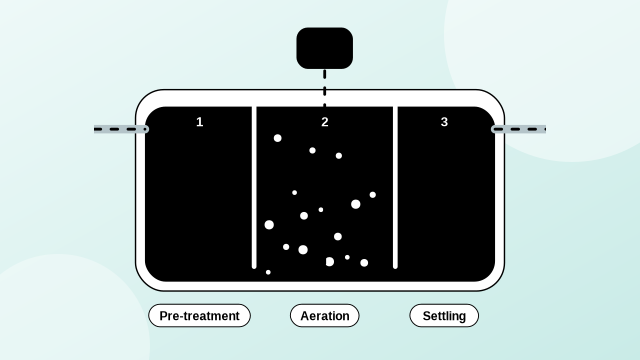 Choosing and buying
In everyday speech, people often mix up septic tanks, cesspools (sealed holding tanks) and wastewater treatment plants (WWTPs).
5 min read Choosing and buying
When renovating a house, or when a cesspool (sealed holding tank) has to be emptied often, many owners ask whether they can replace it with a…
5 min readWrite to us about how you use the cottage, and we will recommend a suitable solution. +421 905 229 394
Strictly necessary cookies keep the website working. With your consent, we also use analytics and marketing cookies (Google, Meta, LinkedIn, Pinterest) to measure traffic and for advertising. You can change your consent at any time using the Cookie settings link in the footer. More about cookies